


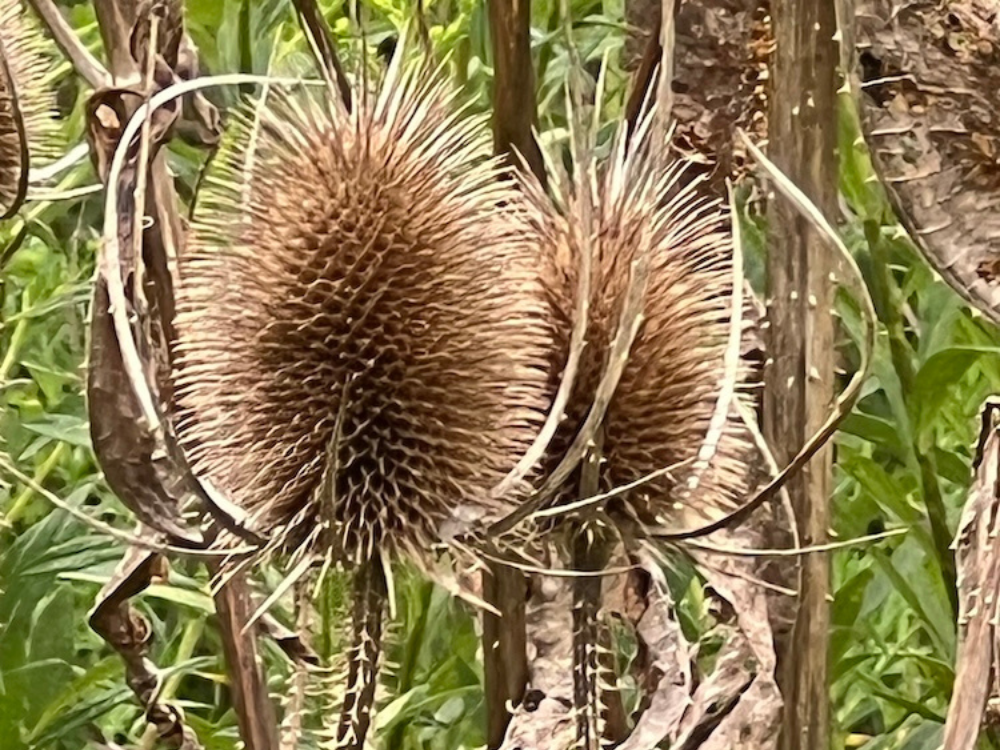
Teasel
Along the field edges, the teasel has gone to seed: dry, spiky, gold-brown heads on tall stalks, the kind of thing that looks aggressive up close and is, a little (handle carefully). We dry and sell teasel heads through our small Etsy shop, but most of what's out there just stands through the fall and winter, feeding goldfinches and looking sharp against the green.
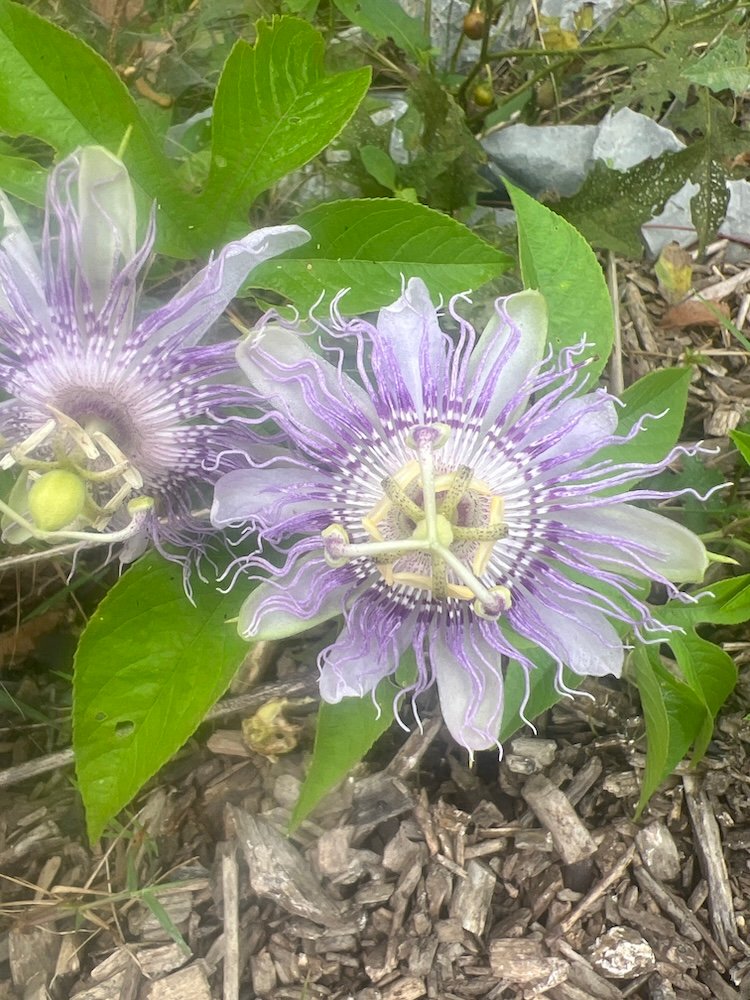
A passionflower, still blooming
Purple passionflower, also called maypop, is native to this part of Tennessee, and one was still blooming when we walked past, its fringed purple petals wide open around a pale green center. It's an odd-looking bloom if you've never seen one up close, more like something from a greenhouse than a roadside vine. It grows wild here, no help from us required.
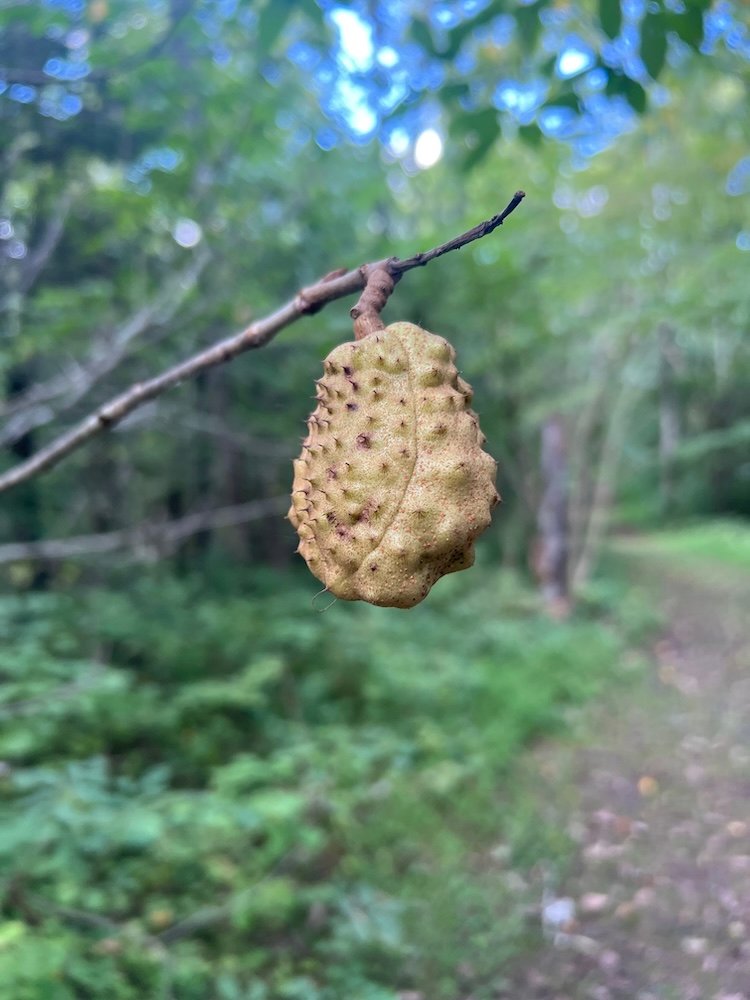
A gall on a black walnut
Further down the trail, a black walnut branch was carrying something that looked like a small, spiky fruit but wasn't: a gall, formed after a wasp got into the branch and the tree grew tissue around it in response. Galls like this are common and mostly harmless to the tree. They're also strange to look at up close, tan and knobby, hanging off a bare stick like it doesn't belong there.
What the creek gives up
The strangest finds, though, come from the creek. Bones. Jawbones with teeth still intact, skulls, wild pig and deer pieces we can't always identify, all of them found on the property, and a good number of them surfacing only after flood waters recede. The creek runs the length of Wild Woods, and when it rises and falls, it rearranges what's underneath it and leaves things behind on the banks. We've found enough over the years to lay a small collection out on a table, and if we're honest, the bones are the creepiest thing the creek has handed us so far.
None of this is staged. It's what's actually out there on 30 acres of working farm and woods, changing week to week, sometimes literally washing up. If you want to see what a walk around Wild Woods turns up when you're here, book a stay at wildwoodsretreat.com.

0 Comments